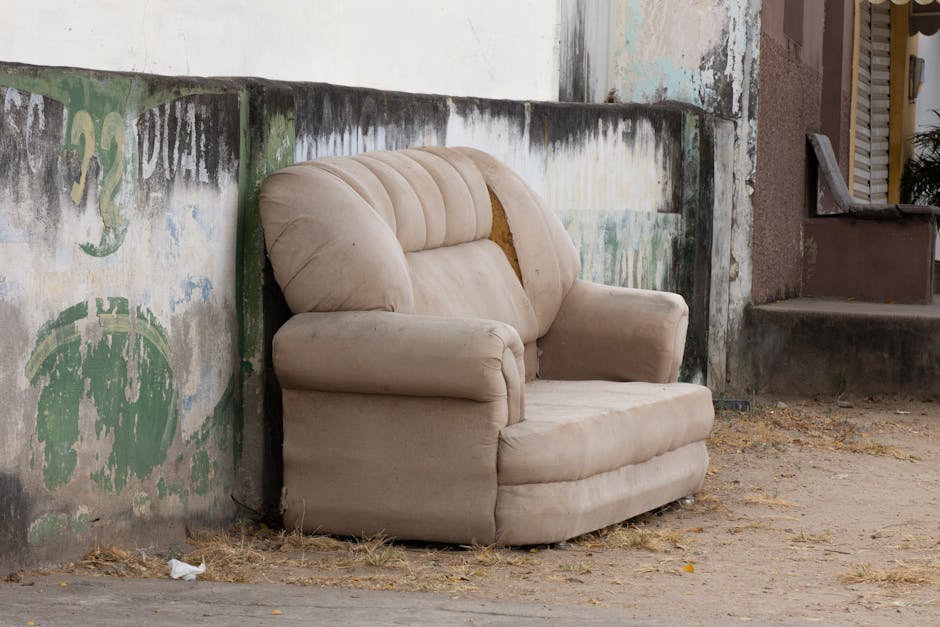
Camden Council upholstery disposal rules for cleaning firms: a practical guide for safe, compliant disposal
If you run a cleaning firm in Camden, upholstery disposal can look straightforward at first glance. A worn sofa, a broken armchair, maybe a stained office waiting-room chair. But once you start moving bulky items out of homes and premises, the details matter. The Camden Council upholstery disposal rules for cleaning firms affect what you can leave out, how you separate waste, and when you need to treat an item as bulky waste rather than ordinary rubbish.
Get it wrong, and you risk delays, missed collections, unhappy clients, and messy compliance issues. Get it right, and disposal becomes one of those quiet, professional parts of the job that people barely notice - which is exactly the point. This guide breaks the process down in plain English so your team can work safely, avoid common mistakes, and handle upholstery removal with confidence.
For firms that also offer broader property cleaning, it often helps to think about disposal as part of the whole service journey, not an afterthought. The same tidy, careful approach that supports deep cleaning or house clearance applies here too: sort, protect, document, and dispose properly.
Why Camden Council upholstery disposal rules for cleaning firms Matters
Upholstery disposal is not just a tidy-up task. It sits at the intersection of waste handling, customer service, property access, and local expectations. Camden, like other London boroughs, expects waste to be managed properly, and cleaning firms are usually the ones left holding the practical end of the problem when a client says, "Can you take this as well?"
That question sounds small. It rarely is.
Upholstered items often contain mixed materials: fabric, foam, springs, timber, plastic fittings, and sometimes contaminants such as dust, pet hair, damp, or pest-related waste. A cleaning company cannot treat every item as simple rubbish. You need to know whether the item is suitable for reuse, whether it can be collected as bulky waste, whether it should be taken to an appropriate waste facility, and whether any contamination changes the handling process.
This matters for three reasons. First, client trust. People want a clean property, not a trail of confusion in the hallway. Second, operational efficiency. Crews that understand disposal rules spend less time making avoidable calls and return visits. Third, risk control. A sofa dumped in the wrong place or placed out for collection incorrectly can create complaints, enforcement problems, or damage to your company's reputation.
In practice, the firms that stay on top of disposal tend to look more professional everywhere else too. The van is organised. The paperwork is cleaner. The job runs smoother. Funny how that works.
How Camden Council upholstery disposal rules for cleaning firms Works
The basic idea is simple: upholstery must be dealt with as waste in the correct way, at the correct time, and in the correct location. The practical steps depend on the item, the property type, and the collection method the client has agreed to use.
For a cleaning firm, the process usually falls into one of these patterns:
- Client arranges disposal separately and asks the cleaning firm only to move the item to a designated point.
- The cleaning firm includes removal as part of a broader cleaning or clearance service.
- The item is assessed as reusable and donated, stored, or passed on where suitable and lawful.
- The item is contaminated or damaged and must be treated as waste requiring careful handling.
Camden Council's approach, like most council waste systems, is built around preventing fly-tipping, keeping pavements clear, and ensuring collection points and schedules are respected. That means you should not assume that a sofa can simply be left outside a property whenever it is convenient. Timing matters. Access matters. Neighbours matter. The pavement outside a terraced house at 8:00am looks very different from the same space at 7:00pm, and councils care about that distinction.
One of the most overlooked details is separation. If the item includes loose cushions, throws, packaging, broken legs, or loose fixings, sort those parts before moving anything. It sounds obvious, but in a busy post-cleaning departure, obvious things get missed. We have all seen that happen.
Cleaning firms should also think about the link between upholstery disposal and related services. For example, a sofa removed after sofa cleaning may still need careful handling because moisture, odour, or cleaning residues can affect how it is stored and transported. Similarly, if an item is part of an end-of-tenancy clear-out, disposal planning is best done before the team starts loading the van.
Key Benefits and Practical Advantages
Getting upholstery disposal right gives you more than compliance. It improves the whole customer experience and makes your operation less stressful. Truth be told, it is one of those back-of-house details that quietly separates decent firms from very good ones.
- Fewer collection problems: items are handled in a way that matches local expectations, reducing missed disposal attempts.
- Better client communication: customers know what is included, what is not, and what happens to their old furniture.
- Lower risk of disputes: clear disposal terms reduce confusion over whether the firm was responsible for removal.
- Cleaner sites: no abandoned foam, no torn fabric, no half-moved armchairs left in a corridor.
- Stronger sustainability practice: reusable items can be diverted from disposal where appropriate, and recyclable components can be separated where feasible.
- Safer teams: proper lifting, wrapping, and loading reduces the chance of cuts, trips, and strains.
Expert summary: for a cleaning business in Camden, the real win is not just "getting rid of the sofa." It is building a repeatable process that protects the client, the crew, and the company every single time.
There is also a subtle commercial benefit. When clients see that your firm takes disposal seriously, they are more likely to trust you with the rest of the job. That can matter in post-renovation work, in after builders cleaning, and in larger projects where waste quickly piles up. A firm that handles bulky items properly often feels like a safer pair of hands overall.
Who This Is For and When It Makes Sense
This guidance is relevant to a wide range of firms, not just specialist upholstery cleaners. If your team ever deals with furniture removal, you should know the basics.
- Upholstery cleaning businesses that remove damaged or non-recoverable items.
- Domestic cleaners who occasionally move old furniture during a deep clean or declutter.
- End-of-tenancy teams where abandoned sofas, chairs, or mattresses are part of the job.
- Office cleaning contractors dealing with reception seating, broken task chairs, or outdated waiting-room furniture.
- General cleaning companies offering wider property support, including light clearance.
- House clearance crews that handle mixed loads and need clear waste separation.
It makes sense whenever a client asks for more than a clean surface. If the job involves damp, damage, pest contamination, smoke odour, or a piece of furniture that is beyond saving, disposal becomes part of your service design. A lot of firms think, "We'll sort it on the day." That approach works right up until a lift is booked, a resident is waiting, or the item is too large to move safely without prep. Better to plan early. Much better.
If your firm also handles regular domestic or office contracts, it is worth having a disposal decision tree in place. Even something simple helps: keep, clean, donate, recycle, collect, or reject. Five seconds of clarity can save twenty minutes of faffing around later.
Step-by-Step Guidance
Here is a practical way to manage upholstery disposal without overcomplicating it.
- Inspect the item first. Check size, condition, contamination, and whether it has loose parts.
- Confirm ownership and permission. Never remove furniture without the client's clear instruction. Sounds basic, but yes, it happens.
- Decide the disposal route. Is it reusable, recyclable, suitable for bulky collection, or only fit for waste handling?
- Separate removable components. Take off cushions, legs, covers, or packaging if that makes transport safer and tidier.
- Wrap or protect the item if needed. This is especially useful for wet, dirty, or fraying upholstery.
- Move it safely. Use team lifting, trolleys, straps, or protective gloves depending on the item and access route.
- Place it at the agreed point. If a collection is planned, follow the timing and location rules carefully.
- Record what happened. Keep a brief note on the job sheet or invoice so the disposal trail is clear.
That final step is often ignored, then regretted. A simple note such as "one three-seater sofa removed per client instruction" can save a lot of back-and-forth later. Nothing fancy. Just useful.
For firms offering broader cleaning support, a coordinated approach works best. You might assess the whole property, then carry out deep cleaning around the furniture, and only then decide whether a separate collection is needed. The order matters. Clean first where possible, dispose second, and always leave the site safe and free from stray staples, fabric clips, or broken frame pieces.
Expert Tips for Better Results
A few habits make upholstery disposal far easier in the real world. Not in theory. In real hallways, with awkward corners and a neighbour asking what is going on.
- Take a photo before removal. It helps with client approval, disputes, and job records.
- Ask about access early. Stairs, lifts, narrow doors, and parking can change the plan completely.
- Keep disposal terms in writing. Especially for end-of-tenancy or one-off jobs.
- Train staff to spot contamination. Water damage, mould, pests, and sharp fasteners all change the risk level.
- Use the right PPE. Gloves are not optional when fabric is dusty, damaged, or potentially contaminated.
- Bundle related waste together. If you are already removing a rug, broken chair, or packaging from a clean, the load should be logically arranged.
One small but effective habit: create a "no surprises" checklist before the van doors close. If the furniture is too large, too wet, or too contaminated, catch it before the lifting starts. That way the team does not end up halfway down a staircase thinking, "Well, this was never going to be fun."
And if you offer upholstery cleaning as part of your service mix, keep your disposal process aligned with your cleaning standards. A company that already presents well through upholstery cleaning is halfway to doing disposal well too - same care, same attention, different end point.
Common Mistakes to Avoid
Most disposal problems come from rushing, assuming, or skipping one small step. Here are the big ones to watch for.
- Leaving items out too early: this can cause obstruction complaints or collection issues.
- Assuming every upholstered item is the same: a dry chair is not the same as a damp sofa with broken springs.
- Not confirming client permission: if you did not agree to remove it, do not remove it.
- Mixing waste types carelessly: packaging, general rubbish, and bulky furniture should be handled separately where possible.
- Ignoring contamination: mould, pests, body fluids, or chemical residues can change handling expectations.
- Weak paperwork: if nobody can tell what happened to the item, you may end up answering awkward questions later.
There is also a softer mistake: overpromising. A client wants the old sofa gone by the afternoon. Fair enough. But if access is difficult or the local collection route is not suitable, be honest. Most people prefer a clear "yes, but not like that" over a cheerful mess.
Cleaning firms that also work in offices should be particularly careful. Office chairs and reception seating often get treated casually, yet they can contain metal parts, compressed foam, and specialist fittings. If your team handles office cleaning or supports commercial premises, disposal processes should be as tidy as the cleaning itself.
Tools, Resources and Recommendations
You do not need a complicated kit to manage upholstery disposal properly, but a few tools make life easier.
- Heavy-duty gloves for handling worn fabric, staples, and rough timber frames.
- Furniture blankets or wrap to protect stairwells and reduce fibre shedding.
- Straps and dollies for safer movement of bulky items.
- Job sheets or digital records to note what was removed and why.
- Sorting bags or boxes for legs, cushions, and loose fittings.
- Basic contamination inspection form for items that may need special handling.
From an operations point of view, your best resource is a simple internal policy. It does not have to be a giant manual. It can be a one-page procedure that tells staff what to do, when to stop, and who to ask when the item looks questionable.
For firms trying to build a broader trust profile, supporting policies matter too. A clear health and safety policy and a sensible approach to recycling and sustainability show that disposal is part of how you work, not a side issue you deal with on the fly.
If you manage commercial accounts, disposal rules should also be reflected in your service brief. This is especially true where teams provide cleaning company services across multiple sites or mixed-use properties. One branch might have a storage room for removed furniture; another might not. The plan should fit the site, not the other way around.
Law, Compliance, Standards, or Best Practice
Without overreaching, it is safe to say that upholstery disposal for cleaning firms should be treated as part of general waste compliance and duty-of-care practice in the UK. You do not need to turn every job into a legal seminar, but you do need to act responsibly and keep reasonable records.
Best practice usually means:
- disposing only with the client's authority;
- separating reusable items from waste where appropriate;
- preventing fly-tipping or obstruction;
- protecting staff during lifting and transport;
- making sure any contractor or collector you use is suitable and properly arranged;
- keeping basic evidence of what was removed.
For contaminated items, caution increases. If upholstery is heavily soiled, mould-affected, or suspected of harbouring pests, it may need a different handling route from an ordinary domestic sofa. The safe move is to pause, assess, and avoid guessing. Guessing is a bad business model, honestly.
Cleaners who work in rental properties should also think about their obligations in the context of tenancy handovers and access. When a property is in transition, communication with the client or agent is just as important as the disposal method. If you offer end of tenancy cleaning, make disposal instructions part of the pre-job confirmation so nobody is surprised on the day.
Finally, remember that compliance is not only about the item itself. Safe handling, correct timing, and respectful site behaviour all matter. A clean disposal process is part legal caution, part customer care, and part basic common sense. Which, let's face it, is often the hardest part to find when a van is full and the clock is ticking.
Options, Methods, or Comparison Table
Different jobs call for different disposal methods. The right option depends on the item's condition, urgency, and whether the client wants it reused, removed, or simply placed for collection.
| Method | Best for | Advantages | Things to watch |
|---|---|---|---|
| Client-arranged collection | Simple household items, where the client has already booked removal | Clear responsibility split, less admin for the cleaning firm | Timing must be coordinated carefully |
| Cleaning firm removal | Jobs where disposal is bundled into the service | Convenient for the client, efficient when scheduled well | Needs proper pricing, lifting plans, and records |
| Reuse or donation route | Usable items in good condition | Supports sustainability and reduces waste | Must be appropriate, lawful, and hygienic |
| Special handling due to contamination | Mouldy, pest-affected, or heavily contaminated upholstery | Safer for staff and property | Needs extra caution and sometimes a different service plan |
In many cases, the smartest route is not the fastest one on paper, but the one that avoids a second visit. If the item is large, awkward, and likely to shed debris, a slightly slower planned removal is usually the better choice.
Case Study or Real-World Example
Imagine a small Camden flat after a tenancy ends. The client wants a full clean, the sofa has pet odour, and the tenant has left behind a dining chair with a split seat. The building has a narrow shared hallway, a lift that is not especially generous, and a neighbour who is already a bit fed up because the bins are full.
A sensible cleaning firm would handle it like this:
- confirm the client has authorised removal;
- inspect both items for contamination and access constraints;
- separate loose cushions and removable parts;
- schedule the removal after the main clean, so the team is not carrying dirt through freshly cleaned rooms;
- wrap the items to reduce shedding in the common area;
- note the removal on the job sheet and invoice;
- leave the hallway clear and free of debris.
Nothing dramatic. Just tidy, careful work. The flat looks better, the client gets a clear handover, and the neighbours are less likely to notice anything except that the job was done properly. That kind of quiet competence is the goal.
If the same team also handled a soft-furnishing refresh, they might pair the disposal with rug cleaning or other fabric care work in the same visit, which keeps the service efficient and helps the client feel looked after from start to finish.
Practical Checklist
Use this checklist before your team removes or disposes of upholstery in Camden.
- Has the client clearly approved removal?
- Have you checked the item for damp, mould, pests, or hazardous contamination?
- Do you know whether the item is reusable, collectable, or waste-only?
- Have you confirmed access, parking, and lift or stair conditions?
- Are gloves, straps, wraps, and suitable lifting aids available?
- Have loose parts been removed and bagged separately?
- Is the collection point agreed and suitable?
- Have you considered whether the item needs a different route because of contamination?
- Is the disposal action recorded on the job sheet?
- Have staff been briefed on where the item should go and who is responsible?
If you can tick all ten, you are in good shape. If not, pause for two minutes and fix the gap. Two minutes now beats two phone calls later. Every time.
Get a free quote today and see how much you can save.
Conclusion
Camden Council upholstery disposal rules for cleaning firms are not something to improvise. They sit at the intersection of client care, practical logistics, and proper waste handling. The firms that do this well tend to be the ones that plan ahead, confirm permission, separate items carefully, and keep a clear record of what was removed.
That may sound a bit unglamorous. It is. But in real life, unglamorous systems are what keep a cleaning business reliable.
So whether you are removing one chair after a deep clean or handling multiple items as part of a larger property clear-out, keep the process simple, safe, and consistent. Your staff will thank you. Your clients will notice. And your day will run more smoothly, which is no small thing on a wet Camden afternoon with traffic outside and a sofa in the hallway.
Steady systems beat last-minute fixes. Every time.
Frequently Asked Questions
Can a cleaning firm in Camden just leave upholstery outside for collection?
Only if the removal has been properly arranged and the placement follows the relevant collection expectations. Do not assume that leaving a sofa outside is automatically acceptable. Timing, location, and permission all matter.
What counts as upholstery for disposal purposes?
Usually items such as sofas, armchairs, dining chairs with padding, office seating, stools with fabric or foam components, and other upholstered furniture. If it has padding, fabric, springs, or foam, treat it carefully.
Do cleaning firms need client permission before removing furniture?
Yes. Always. Even if the item looks abandoned, you should have clear instruction from the client, landlord, agent, or authorised person before moving it.
What should we do if the upholstery is mouldy or contaminated?
Stop and assess it carefully. Contaminated items can require different handling from ordinary waste. Use gloves, protect the area, and avoid lifting it casually through clean rooms.
Is it better to donate usable upholstery instead of disposing of it?
If the item is genuinely clean, safe, and suitable for reuse, that can be a sensible option. But it must be appropriate and lawful. Don't pass on something that is damaged, unhygienic, or unsound.
How should we record upholstered item removal?
Keep a simple note on the job sheet or invoice showing what was removed, when, and under whose instruction. A short record can prevent confusion later.
Do office chairs follow the same disposal approach as sofas?
The basic approach is similar, but office chairs may have different materials, fixings, and contamination risks. If you provide office cleaning, make sure staff know how to assess them properly.
Should upholstery disposal be included in the cleaning quote?
If removal is part of the work, yes, it should be set out clearly. That helps prevent disputes and lets the client compare services fairly.
What is the biggest mistake cleaning firms make with bulky furniture?
Usually it is assuming the item can be moved or dumped without checking access, permission, and condition. The second biggest mistake is poor communication. Those two create most problems.
How can a cleaning company make upholstery disposal more efficient?
Build a simple internal process, train staff to inspect items early, keep the right lifting and wrapping equipment on the van, and document removal clearly. Efficiency usually comes from consistency, not speed.
Does Camden treat every furniture item as ordinary waste?
No, not in practical terms. Upholstered furniture often needs more careful handling because it is bulky, mixed-material, and sometimes contaminated. Treat it as a managed disposal task, not a bin-bag issue.
Where can a firm learn more about responsible handling and related services?
Look at your own internal policies first, especially safety, sustainability, and service terms. For broader service planning, pages such as about us and terms and conditions can also help set expectations for clients and teams.